One of the first art works I
chose was “Sunrise on the Matterhorn” by Albert Bierstadt. I chose this because
it looks very peaceful. I can picture myself hiking up the mountains and being
away from civilization, being somewhere where people don’t normally pass by and
the scenery is adventurous. The second artwork is “Sea Cove” by Albert
Bierstadt. I have chosen this because I don’t normally like beaches. Since they
are always crowded, I don’t like lying down in the sun, and the heat irritates
me. However, looking at this painting changes my perspective and brings out the
fun in my imagination. I can picture being there on the soft warm sand between
my toes, feeling the heat waves riding in with the breeze, and also swimming in
the water. The third work of art is “View of Toledo” by El Greco. I feel this
reflects my life. Growing up where I had to deal with a strict mother who
didn’t give me a lot of freedom when I wanted it. However, when I started
obtaining freedom and started traveling I used to go to the city and
Forty-Second street with my friends. In El Greco’s “Toledo”, the pathway shown represents
my journey and the growing up I’ve done to be able to be mature enough to
travel. The fact that the painting’s view shows a part of an urban place
expresses how I have only gotten a glimpse of the world and that there is still
much more I have explored yet. The fourth work of art in my exhibit is “A
Forest at Dawn with a Deer Hunt” by Peter Paul Rubens. I enjoy the forest and
nature. Many movies I’ve watched take place in some type of forest or woods.
The woods are very mysterious and it lures my attention.
Additionally, I have chosen a fifth work of art to show
called “The Afternoon Meal (La Merienda)” by Luis Egidio Meléndez. I have chosen this because I love food. If it were
a person I would date it. The image of this food just makes my ideal place even
better. I can imagine sitting down in that painting eating all the fruit, then
just laying there alone looking up at the sky thinking about how stuffed I
would be. Another work of art I have chosen is “Desert” by Peter Booth. I chose
this piece of art because it is suppose to reflect a dessert however; it has so
much color and shapes and odd lines. This reflects me by expressing my idea of
a getaway and a dessert is a good place where I would be able to get away and
explore. All of the colors in creativity shown represent all of the fun and
excitement there would be if I were to be in such a place. The seventh work of
art I have chosen is “The Angel of Death and
the Sculptor from the Milmore Memorial” by Daniel Chester French. I have chosen
this because apart of my ideal place is that there are no problems and one
problem that worries me at least four times a week is death. It isn’t really
something I enjoy to think about but it’s something that pops into my head a
lot and I find it scary but yet interesting and mysterious. The eighth work of
art I have chosen is “Manuel Osorio Manrique de Zuñiga (1784–1792)” by Goya
(Francisco de Goya y Lucientes) (Spanish, Fuendetodos 1746–1828 Bordeaux).
I have chosen this work of art because this painting represents youth and
innocence in which I still at times feel I’ll always have within myself.
The
ninth work of art I have chosen was “Passenger” by Doug Aitken. I chose this
work of art because a part of my ideal place is getting away and traveling to a
place where I can explore. The perspective from which the photograph was taken
is where I can imagine being, on my way to somewhere where I have not been
before such as, Greece, or Italy or even Spain. Next, I chosen an artwork
called “Bed (Lit à La Duchesse En Impériale)” by Georges Jacob. I chose this
for my exhibit because my ideal place is a place where I can get away and relax
and think. Therefore, I chose this work of art because I can picture myself lying
in that luxurious and comfortable bed sleeping and dreaming. My eleventh work of art I chosen was a French
coin made by Jules-Clément Chaplain. This coin is suppose to represent an
agreement and that reflects on me because my ideal place involves agreements
because that would be a part of getting rid of reality’s problems I’ve gone
through. My twelfth and final work of art I have chosen was a bowl made in the
tenth-eleventh century. This bowl has an Arabic inscription saying "Blessing,
prosperity, goodwill, peace and happiness". I saved this work of art for
last because this is originally what I want my ideal place to be about.
Hopefully it is what my reality becomes as well.
Sunrise on the Matterhorn
Albert Bierstadt (American, Solingen 1830–1902 New York City)
- Date:
- after 1875
- Medium:
- Oil on canvas
- Dimensions:
- 58 1/2 x 42 5/8 in. (148.6 x 108.3 cm)
- Classification:
- Paintings
- Credit Line:
- Gift of Mrs. Karl W. Koeniger, 1966
- Accession Number:
- 66.114
-

Sea Cove
Albert Bierstadt (American, Solingen 1830–1902 New York City)
- Date:
- ca. 1880–90
- Medium:
- Oil on wood
- Dimensions:
- 14 x 19 in. (35.6 x 48.3 cm)
- Classification:
- Paintings
- Credit Line:
- Gift of Mrs. J. Augustus Barnard, 1979
- Accession Number:
- 1979.490.4

View of Toledo
El Greco (Domenikos Theotokopoulos) (Greek, Candia (Iráklion) 1540/41–1614 Toledo)
- Medium:
- Oil on canvas
- Dimensions:
- 47 3/4 x 42 3/4 in. (121.3 x 108.6 cm)
- Classification:
- Paintings
- Credit Line:
- H. O. Havemeyer Collection, Bequest of Mrs. H. O. Havemeyer, 1929
- Accession Number:
- 29.100.6

A Forest at Dawn with a Deer Hunt
Peter Paul Rubens (Flemish, Siegen 1577–1640 Antwerp)
- Date:
- ca. 1635
- Medium:
- Oil on wood
- Dimensions:
- 24 1/4 x 35 1/2 in. (61.5 x 90.2 cm)
- Classification:
- Paintings
- Credit Line:
- Purchase, The Annenberg Foundation, Mrs. Charles Wrightsman, Michel David-Weill, The Dillon Fund, Henry J. and Drue Heinz Foundation, Lola Kramarsky, Annette de la Renta, Mr. and Mrs. Arthur Ochs Sulzberger, The Vincent Astor Foundation, and Peter J. Sharp Gifts; special funds, gifts, and other gifts and bequests, by exchange, 1990
- Accession Number:
- 1990.196
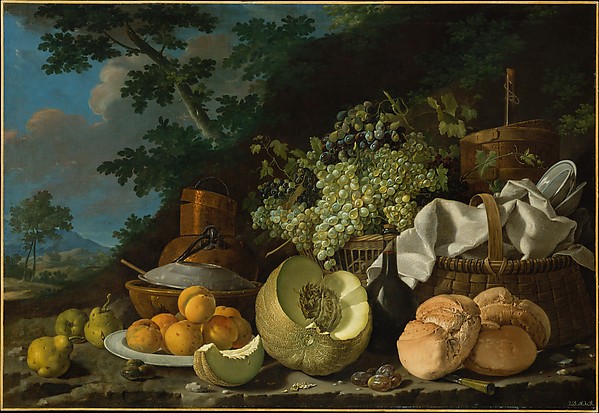
The Afternoon Meal (La Merienda)
Luis Egidio Meléndez (or Menéndez) (Spanish, 1716–1780)
- Date:
- ca. 1772
- Medium:
- Oil on canvas
- Dimensions:
- 41 1/2 x 60 1/2 in. (105.4 x 153.7 cm)
- Classification:
- Paintings
- Credit Line:
- The Jack and Belle Linsky Collection, 1982
- Accession Number:
- 1982.60.39
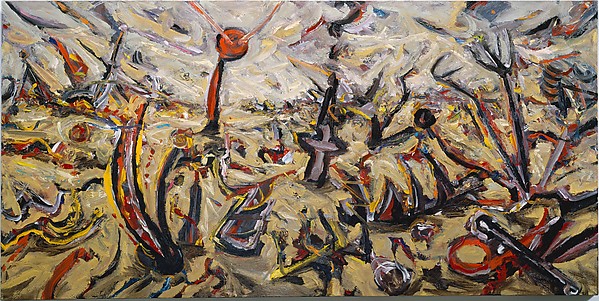
Desert
Peter Booth (Australian, born 1940)
- Date:
- 1985
- Medium:
- Oil on canvas
- Dimensions:
- H. 48, W. 96 inches (121.9 x 243.8 cm.)
- Classification:
- Paintings
- Credit Line:
- Purchase, Mr. and Mrs. Roy B. Simpson Gift, 1986
- Accession Number:
- 1986.219
- Rights and Reproduction:
- © 2011 Artists Rights Society (ARS), New York
-

The Angel of Death and the Sculptor from the Milmore Memorial
Daniel Chester French (American, Exeter, New Hampshire 1850–1931 Stockbridge, Massachusetts)
- Date:
- carving date 1921–26, modeling date 1889–93
- Medium:
- Marble
- Dimensions:
- 93 1/2 x 100 1/2 x 32 1/2 in. (237.5 x 255.3 x 82.6 cm)
- Classification:
- Sculpture
- Credit Line:
- Gift of a group of Museum trustees, 1926
- Accession Number:
- 26.120
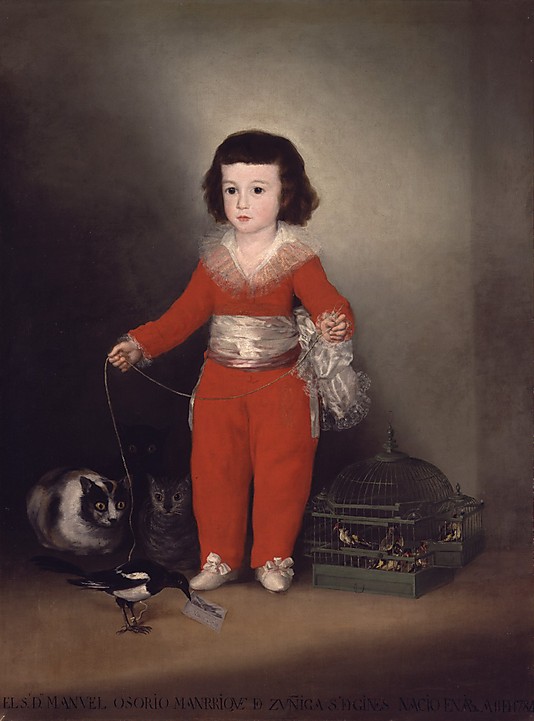
Goya y Lucientes) (Spanish, Fuendetodos 1746–1828 Bordeaux)
- Medium:
- Oil on canvas
- Dimensions:
- 50 x 40 in. (127 x 101.6 cm)
- Classification:
- Paintings
- Credit Line:
- The Jules Bache Collection, 1949
- Accession Number:
- 49.7.41
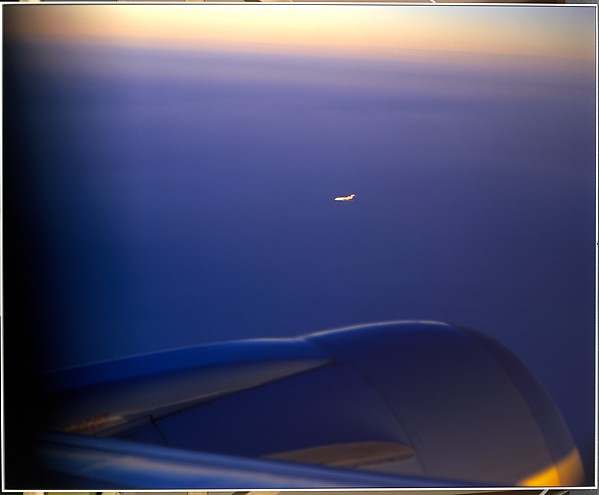
Doug Aitken (American, born Redondo Beach, California 1968)
- Date:
- 1997, printed 2004
- Medium:
- Chromogenic print
- Dimensions:
- Image: 100.5 x 122 cm (39 9/16 x 48 1/16 in.) Frame: 103.2 x 125.7 cm (40 5/8 x 49 1/2 in.)
- Classification:
- Photographs
- Credit Line:
- Purchase, Alfred Stieglitz Society Gifts, 2004
- Accession Number:
- 2004.223
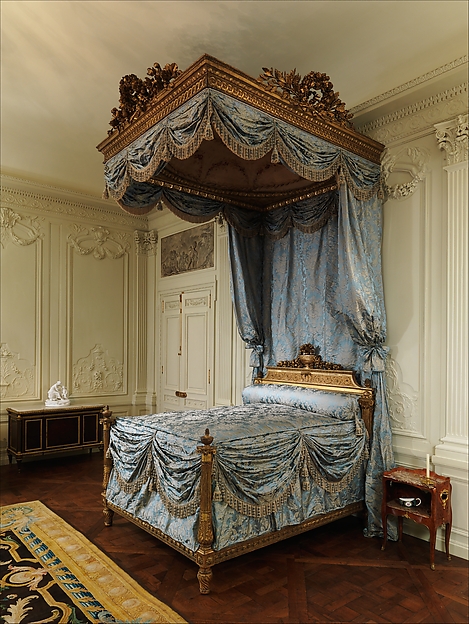
Bed (Lit à La Duchesse En Impériale)
Georges Jacob (1739–1814, master 1765)
- Factory:
- Tapestry made at Beauvais
- Artist:
- After a design by Jean Baptiste Huet I (French, Paris 1745–1811 Paris)
- Date:
- ca. 1782–83
- Culture:
- French (Paris)
- Medium:
- Carved and gilded walnut, lindenwood, pine; iron; silk and wool Beauvais tapestry and modern silk damask
- Dimensions:
- Overall (bed components installed): 156 3/4 x 73 1/2 x 86 3/4 in. (398.1 x 186.7 x 220.3 cm) Other (of headboard): 79 1/2 x 73 1/2 in. (201.9 x 186.7 cm) Other (of tester at rectangular frame): 78 x 90 1/2 in. (198.1 x 229.9 cm) Other (Greatest dims. of tester including protruding crestings): 96 x 99 1/2 x 17 in. (243.8 x 252.7 x 43.2 cm) H. of canopy from floor: 156-3/4 in. (398.1cm)
- Classification:
- Woodwork
- Credit Line:
- Gift of Kingdon Gould, in memory of his mother, Edith Kingdon Gould, 1923
- Accession Number:
- 23.235a
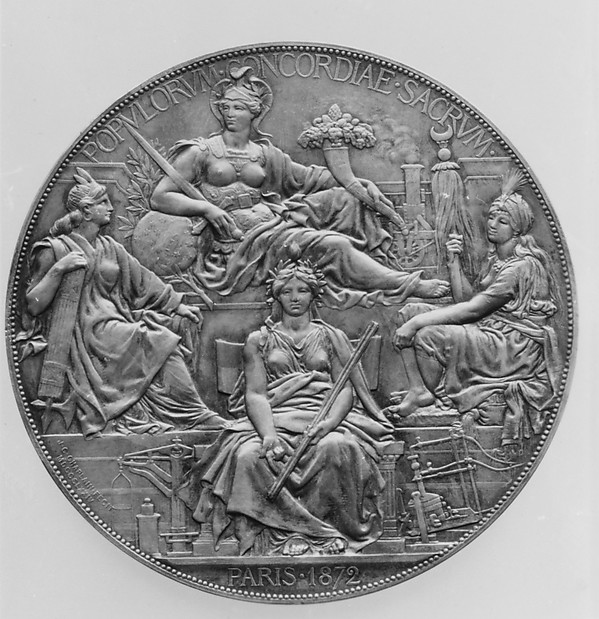
To commemorate the Congress held at Paris (1872-3) to regulate the adoption of the Metric System.
Medalist: Jules-Clément Chaplain (1839–1909)
- Date:
- 1874
- Culture:
- French
- Medium:
- Bronze, silvered (cliché), struck
- Dimensions:
- Diam. 3-15/16 in. (100 mm.)
- Classification:
- Medals
- Credit Line:
- Gift of Samuel P. Avery, 1893
- Accession Number:
- 93.10.63
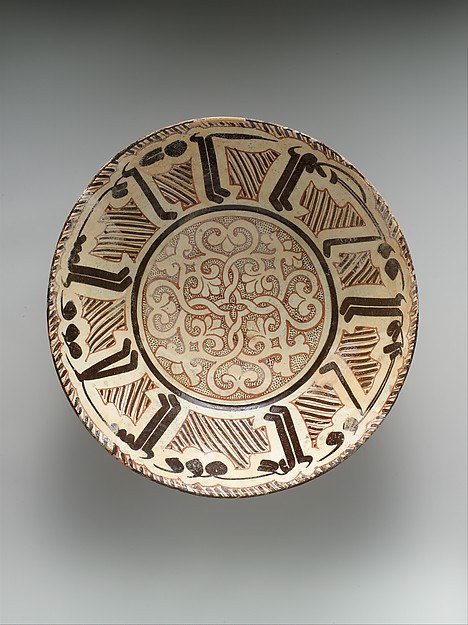
Bowl with Arabic Inscription, "Blessing, prosperity, goodwill, peace and happiness"
- Object Name:
- Bowl
- Date:
- late 10th–11th century
- Geography:
- present-day Uzbekistan, probably Samarqand; Iran, Nishapur
- Medium:
- Earthenware; white slip with polychrome slip decoration under transparent glaze
- Dimensions:
- Max Diam. 14 in. (35.6 cm) H. 4 1/4 (10.8 cm)
- Classification:
- Ceramics
- Credit Line:
- Rogers Fund, 1940
- Accession Number:
- 40.170.15


